How to apply your dry shampoo ?
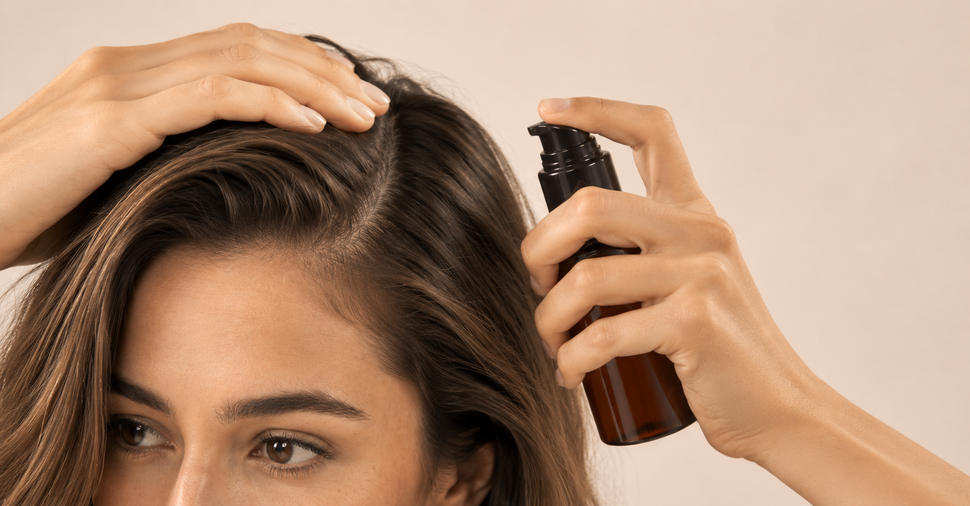
How to Properly Apply Dry Shampoo
Dry shampoo has a reputation as a last-minute shortcut, but used correctly, it's a real hair care tool, not just a quick fix between washes. The problem is that most people use it the wrong way, which leads to disappointing results: hair that still looks greasy, a pasty texture, or visible white residue.
Here's what you need to know.
What exactly is dry shampoo?
Dry shampoo is a powder or aerosol that absorbs excess sebum at the root without water. Unlike a real shampoo, it doesn't deep-clean the scalp. It temporarily masks the greasy look and brings volume back to the roots.
It's a great addition to your routine, but it doesn't replace regular washing.
How to apply dry shampoo, step by step
- Spray from about 6-8 inches away from the scalp, directly at the roots, not on the lengths.
- Section your hair to properly reach the scalp, especially if your hair is thick or long.
- Let it sit for 1 to 2 minutes before continuing. The product needs time to absorb the sebum.
- Massage with your fingertips to evenly distribute the product and loosen residue.
- Brush or comb through to remove excess product and naturally redistribute volume.
The most commonly skipped step is the waiting time before brushing. Applying and brushing immediately often leaves visible residue.
The best time to apply it: at night, before bed
This is a tip many stylists recommend, but few people know about: applying your dry shampoo the night before, rather than in the morning right before heading out.
While you sleep, the powder has all the time it needs to absorb excess sebum deeply. In the morning, hair feels lighter, visibly clean, and has nice volume at the roots, since the product had time to fully blend into the hair overnight.
It's a simple trick that makes a big difference compared to a quick morning application, where the product only has a few minutes to work before you're out the door.
Why does my hair still look greasy after using dry shampoo?
A few common reasons:
- Spraying too close to the scalp, which concentrates too much product in one spot without proper absorption.
- Not enough waiting time before brushing.
- Not enough product on very oily roots. It's better to apply in light layers than all at once.
- Hair already too greasy to start with. Dry shampoo works best as prevention, before sebum becomes too visible, rather than as a fix for an already noticeable buildup.
How to avoid white residue
Residue is almost always caused by too much product or not brushing thoroughly enough afterward. To avoid it:
- Use a tinted dry shampoo, like Moroccanoil or Design.Me if you have dark or colored hair. These formulas are pigmented to blend directly into your hair color, which nearly eliminates the risk of visible residue compared to classic white formulas.
- Spray in small amounts and assess before adding more.
- Always brush thoroughly after the waiting time, until no trace remains.
- Apply at night rather than in the morning, as mentioned above. The extra absorption time also reduces the risk of visible residue.
How often can you use dry shampoo?
Ideally, 1 to 3 times a week, alternating with real washes. Used too often, dry shampoo can build up on the scalp and clog follicles, dry out the scalp over time, or create a cycle where the scalp reacts by producing even more sebum.
Using dry shampoo regularly isn't a problem in itself, but it should never fully replace a real wash.
Can dry shampoo replace a full wash?
No. It temporarily masks the greasy look, but it doesn't actually clean the scalp, doesn't remove styling product buildup, and provides no care for the lengths. It's a touch-up tool to extend time between washes, not a substitute.
Need help fitting dry shampoo into your routine?
At Industria Coiffure, we can help you choose the formula that best suits your hair color, scalp, and lifestyle. A good dry shampoo, used properly, can really change your hair routine.
Frequently asked questions about dry shampoo
Can dry shampoo clog scalp pores?
Excessive use without regular washing can indeed lead to buildup. That's why it's recommended to alternate with real shampoo rather than using it daily over a long period.
Does dry shampoo work for all hair types?
Yes, but the format can make a difference. For dark or colored hair, a tinted dry shampoo is generally the best choice, since it blends directly into the color. For lighter hair, classic powder or aerosol formulas work well, as long as you control the distance and amount applied.
Can you apply dry shampoo to wet hair?
No, dry shampoo is designed to absorb sebum on dry hair. Applied to wet hair, it doesn't work the same way and can leave a pasty texture.
Is it really better to apply it at night rather than in the morning?
Yes, in most cases. The extended absorption time overnight allows the product to work more thoroughly, resulting in cleaner-looking hair and less visible residue in the morning, compared to a quick application right before heading out.
How long does dry shampoo last in your hair?
Generally, the effect lasts a full day, sometimes longer depending on your sebum production level and physical activity.
Can dry shampoo cause hair loss?
There's no proven direct link between dry shampoo and hair loss. However, excessive buildup without proper washing can create a less healthy environment for the scalp over time.
It's a great addition to your routine, but it doesn't replace regular washing. To choose the right base shampoo, check out our guide on how to choose the right shampoo for your hair type.
Recent articles
View all
The best solutions for hair loss : what actually works ?

How to choose the right shampoo for your hair type ?